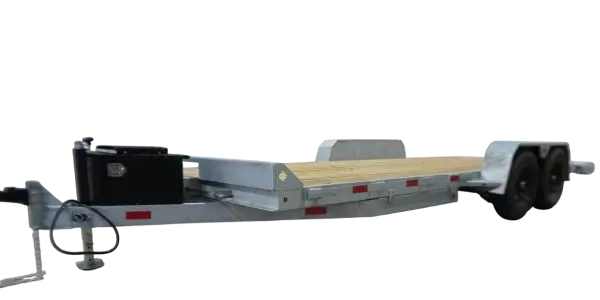
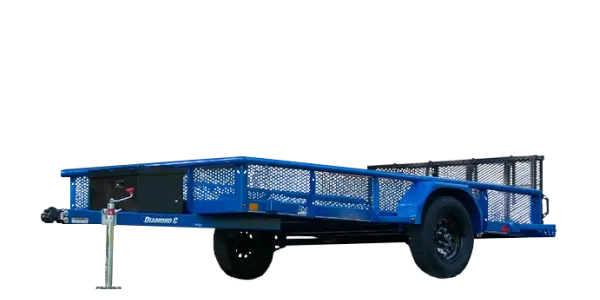

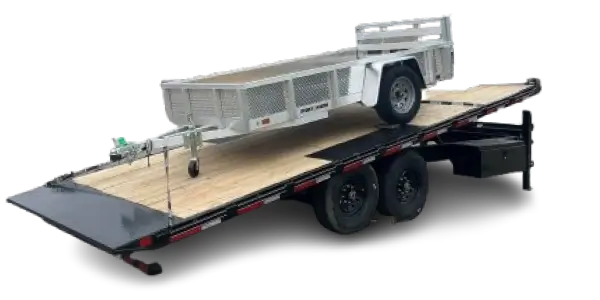











Open steel decks and enclosed carriers, side by side
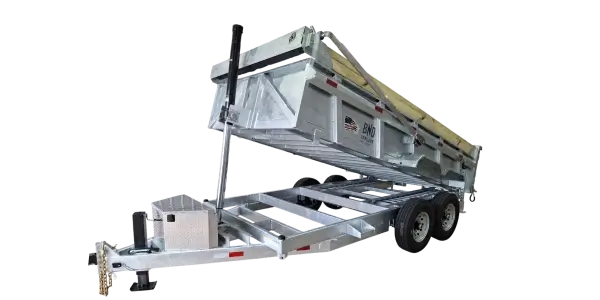
A car hauler is one of the few trailers where the wrong choice shows up in the first ten minutes, usually as a bumper scraping the ramp. We keep open steel haulers and enclosed car carriers in Grandville, most of them around the twenty foot mark, which covers almost everything from a lowered project car to a full size pickup. Filter the list below by length, deck width or GVWR, or scroll the whole lineup and see what is on the ground today.


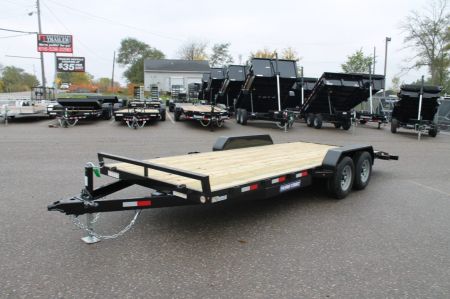
Getting a car on and off without drama
People usually arrive knowing the car and nothing about the trailer, which is the right way round. Almost every useful decision, from deck length to ramp type, falls out of three numbers: how long the vehicle is, how wide it is at the mirrors and tires, and how low it sits at the front.
Deck width is the number people forget
Length gets all the attention, but width is what strands you. An eighty-two inch deck between the fenders is the common open car hauler measurement, and it fits the large majority of passenger cars with room to open a door. A dually, a wide-body project or anything on a stretched track wants the fenders out of the way entirely, which is where a deckover, or a carrier with the wheel wells outboard, earns its money.
Ramps, slide-outs and dovetails
Ground clearance decides which loading arrangement you need. A standard set of five foot ramps against a flat deck gives an angle that will catch an air dam on a lowered car. A dovetail, where the last few feet of deck slope down toward the rear, drops that angle considerably and is worth asking about if you are moving anything sporty. Slide-out ramps that store under the deck save you lifting them on and off every time, which matters more than it sounds when you are doing it alone in a parking lot.
Why so many car haulers stop at 9,990 pounds
You will notice almost everything in this category is rated at or just under ten thousand pounds. That is deliberate. Staying under 10,000 pounds GVWR keeps the trailer clear of several commercial registration thresholds, and it matches what a half ton or three quarter ton truck can comfortably pull. Subtract the empty trailer weight from that rating and you have your real payload, which on a typical steel hauler leaves somewhere in the region of six to seven thousand pounds of vehicle.
Open or enclosed, and what each one costs you
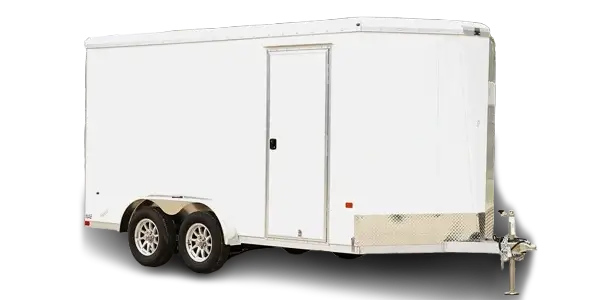
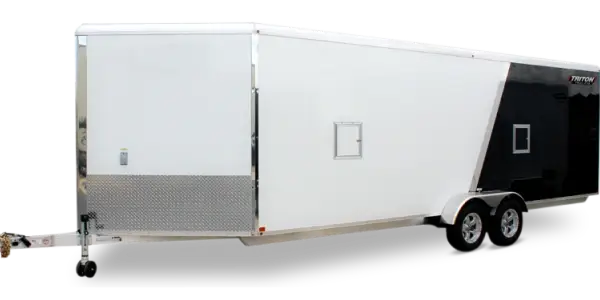
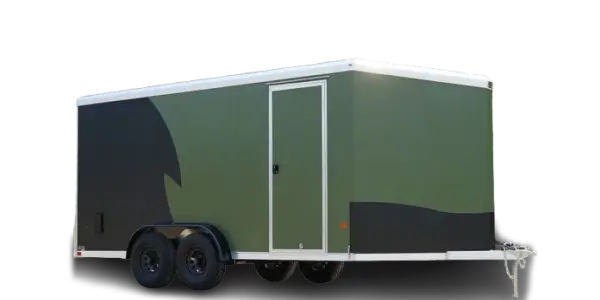
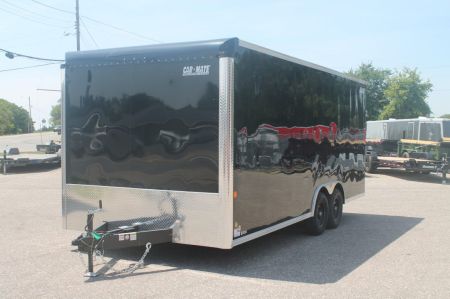
An open steel hauler is cheaper, lighter, easier to load from any angle and simple to strap down. It also leaves the car in the weather and in plain view. An enclosed carrier solves both of those and gives you a lockable workshop on wheels, at the price of more weight, more wind resistance, worse fuel economy and a blind spot where your mirrors used to be. If the trailer will sit outside all winter in West Michigan, the box protects the cargo, but the running gear underneath still needs the same attention.
Tie-downs, winches and the wiring
Four points, not two. Over-the-tire straps are kinder to suspension than chaining an axle, and they stop the car moving on its springs every time you brake. Ask where the D-rings sit before you buy, because adding them to a deck later is a job. If you plan to load a car that does not run, budget for a winch and the mount to carry it, and have the wiring pulled at the same time rather than trailing a lead from the truck.
Car trailer questions
For most passenger cars and small trucks, a twenty foot deck is the sensible default and is what we stock most of. Measure your vehicle bumper to bumper and add roughly two feet so the tires are not sitting on the very edge of the deck. Long wheelbase pickups and anything with a big front overhang usually want twenty two feet or more.
Usually yes, provided you check the sticker in the door jamb rather than the brochure. A loaded open car hauler commonly lands between six and eight thousand pounds, which is within range for most modern half ton trucks with a tow package. Enclosed carriers are heavier and sit closer to the limit, and both need a working brake controller.
Yes. Michigan requires trailers over a certain weight to have their own braking system, and every car hauler in this category is well past that point. They come with electric brakes, and the tow vehicle needs a brake controller for them to work. If your truck does not have one, our service department can sort that out.
Not always on a flat deck with standard ramps. Ask about a dovetail deck or longer ramps, which reduce the loading angle substantially. Bringing the car with you, or at least the ride height and front overhang measurements, is the quickest way to get a straight answer.
Yes. We take trailers in on trade against anything in stock, car haulers included. Bring the title along and we can look at it while you are here.